Tuesday, May 1, 2012

Legion hides its Pedophile Priests, Cardinal O'Malley reveals

Image Detail


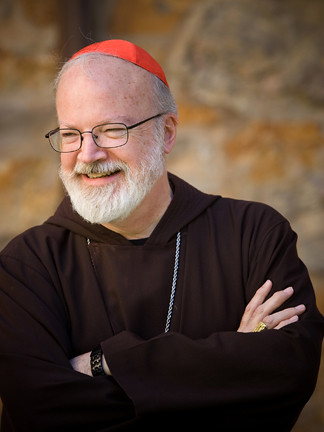
Maciel, DePaolis, O'Malley


Compare this policy to the Legion of Christ which has done very little to take care of its priest pedophile problem. 
Legionary of Christ pedophile priests/seminarians and sex abusers are hidden behind all the 'scandal' of Marcial Maciel. As if he were the only one.
Supposing that Maciel sexually abused in various ways over a 100 seminarians -and the reality could be much worse- and supposing that one in ten of them became an abuser. Then we would have at least 10 Sexually Abusing priests in the Legion. Anecdotal testimonies, mostly on REGAIN, INC, website, bear this out. There are case of several Legionary priests and superiors who have followed in the footsteps of the founder. Tenacious efforts by some of the victims have been able to ferret out some of them.
The Legion has done nothing substantial to take care of this problem except, in following its charism, hide and deceive; superiors' actions have ranged from:
barefaced denial,
blaming the victim
absconding the abuser
sending him away from the law -to Latin America
Below is the statement by Cardinal O'Malley of Boston in August of 2011
---
Settlement amounts to victims, according to reports from the Apostolic Delegate himself have been in the 10s, 20s and 30s of thousands. Absolutely paltry!


CARDINAL O'MALLEY ON DECISION TO PUBLISH NAMES OF ACCUSED PRIESTS


"I Would Like to Share My Rationale for Arriving at This Decision"

BOSTON, AUG. 27, 2011 (Zenit.org).- Here is the text of a statement published Thursday by Cardinal Seán O'Malley, archbishop of Boston, regarding his decision to publish the names of clergy accused of sexually abusing a child.
* * *
My Dear Friends in Christ,
The Archdiocese of Boston's commitment and responsibility is to protect children and to ensure that the tragedy of sexual abuse is never repeated in the Church. Since the crisis erupted in 2002, we have endeavored to regain trust by addressing the needs of survivors and those who have suffered as a result of clergy sexual abuse, investigating and responding to all allegations of misconduct involving minors, removing abusive priests from active ministry consistent with our zero tolerance policy, and creating and maintaining safe environments for children in our churches and schools. Much has been accomplished in Boston since 2002, but our work in this area is continuing, and we will remain ever vigilant.
The Archdiocese is continually evaluating its policies and practices to ensure that our child protection and abuse prevention efforts are further strengthened. Consistent with that effort, I have studied suggestions that we enhance the present Archdiocesan policy with respect to sharing information about clergy accused of sexually abusing minors. This is a complex issue involving several competing considerations. On the one hand, there is the critically important need to assure the protection of children and also important considerations related to transparency and healing; on the other, there are interests related to the due process rights and reputations of those accused clergy whose cases have not been fully adjudicated, including deceased priests who were not alive to respond to the allegations. After a careful study of our present policy in light of these considerations, as well as after a chance to consult with my advisors and advisory bodies, including the Presbyteral Council and Archdiocesan Pastoral Council, I am announcing today revisions to the policy of the Boston Archdiocese with respect to disclosing names of clergy accused of sexually abusing minors.
This revision comes after serious and thoughtful consideration and prayer by myself and many others. I am acutely aware of the harm that the abuse of children by clergy has caused in the lives of so many. And while I know there will be some who believe our policy changes should go further, after careful consultation and consideration of views expressed by many people and groups, I believe that the changes we are making are appropriate and I would like to share my rationale for arriving at this decision.
Since 2002, the Archdiocese has had in place a vigorous policy with respect to disclosing information about clergy accused of abusing minors. First and foremost, it is the policy of the Archdiocese to immediately report to law enforcement all allegations of clergy sexual abuse of children. These notifications are made to local District Attorneys' offices, the Massachusetts Attorney General, and, when appropriate, federal law enforcement. These notifications are made whether or not the person reporting the abuse is still a minor, whether or not the accused cleric is still alive, and whether or not the allegations have been evaluated to have even the semblance of truth. Second, the Archdiocese publicly discloses when a member of its clergy is removed from active ministry pending an investigation into an allegation of child abuse. Finally, the Archdiocese publicly discloses when a member of its clergy is convicted of sexual abuse of a child as a result of a criminal process or when, after a canonical process, a member of the clergy is removed from the clerical state.
In addition to these disclosures in individual cases, the Archdiocese has released extensive information about the abuse cases in Boston. The Archdiocese published, in February 2004, a comprehensive report on the number of accused priests in the Boston Archdiocese, as well as the number of victims of those priests, in the period 1950-2003.1 This report compiled various key statistics regarding the allegations of abuse made against clergy in the Boston Archdiocese, as well as information on settlements that had been reached historically by the Boston Archdiocese. In addition to this report, the Archdiocese has published annual financial reports starting in 2006, including, among other financial information, information about the abuse settlements reached each year, the financial sources for those payments, and the related costs for Archdiocesan pastoral and child protection efforts.2  Additionally, the Archdiocese has produced extensive documentation with respect to past allegations of clergy sexual abuse both in response to requests from law enforcement and in civil litigation. Information from those files has been summarized in a report published in 2003 by the Massachusetts Attorney General's office.3
The policy which I am announcing today will retain our present practices and also supplement them in key respects. First, the Archdiocese has created for its website (www.bostoncatholic.org) a compiled list of names of accused clergy in the following categories:
The names of all Boston Archdiocese clergy who have been found guilty of sexually abusing a child, either by the Church (canon law), the State (criminal law), or both. In the case of criminal convictions, the cleric either has been convicted after a criminal trial or has pled guilty to a crime involving the sexual abuse of a child. In the case of canonical processes, the clerics whose names are included either have been dismissed from the clerical state at the end of the canonical process, or have been assigned to a life of prayer and penance, with no ministry possible. The names of all Boston Archdiocese clergy who have been laicized after having been accused of sexually abusing a minor. Laicization under Church law is a process whereby the priest voluntarily requests that he be separated from the clerical state. The names of all clergy of the Archdiocese who have been publicly accused of sexually abusing a child where canonical proceedings remain to be completed. In each case, the cleric involved has been removed from public ministry and remains on administrative leave. The names of Boston Archdiocese clergy who have been publicly accused of sexually abusing a child, but who had already been laicized and therefore were no longer in active ministry by the time the accusations were received.The names of those deceased clergy of the Archdiocese who have been publicly accused of sexually abusing a child, but where criminal or canonical proceedings were not completed. In most of these cases, the accused priest had died before the allegations were received.
This represents the first time that names of accused clerics have been compiled by the Archdiocese in a central location and a readily accessible format.
Second, as to each member of the clergy whose name is listed in these categories, the Archdiocese has included in this website the following pertinent information: the cleric's year of birth and year of ordination; whether the cleric is alive or deceased, and if deceased, the year of death; for members of the clergy who are alive, their status as well as the date of any laicization, dismissal, or conviction of the accused cleric; and a link to the cleric's assignment history. This list, which is searchable, will be regularly updated as additional announcements are made in the future.
Third, I have decided to publish a separate listing of the names of those clergy who have been publicly accused of sexually abusing a child where the allegations have been found unsubstantiated by the Review Board after a preliminary investigation or where the priest has been acquitted after a canonical process. In a number of cases, these priests have been returned to active ministry.
The revised policy being announced today attempts to balance appropriately several considerations which bear on this matter:
The Church needs to be open about clergy accused of crimes against children in order to help foster the process of healing and restoration of trust.Accused priests or deacons who have been laicized or dismissed are no longer in the clerical state and consequently no longer under the authority of the Archdiocese; to the extent they pose any ongoing risk to children, a comprehensive disclosure of their names may assist in addressing that risk.Not only must the Archdiocese honor its commitment to protect children, it must also be mindful of the due process concerns of those whose guilt has not been established. In the present environment, a priest who is accused of sexually abusing a minor may never be able to fully restore his reputation, even if cleared after civil or canonical proceedings. Reputational concerns also become acute in cases concerning deceased priests, who are often accused years after their death with no opportunity to address the accusations against them.
In arriving at our revised policy in this area, I have carefully weighed these considerations. I also have considered what a number of other dioceses have done.
I believe that, to the extent possible, our revised policy addresses the concerns and views that have been expressed, is consistent with if not more expansive than civil law, and best balances the considerations mentioned above. In arriving at this revised policy, there were a few issues that were particularly difficult and I would like to comment briefly on them.
The first issue has to do with the listing of the names of deceased priests who have been accused of abusing a child. More concern was expressed as to this category than any other. As to deceased priests, there is, by definition, no consideration relating to child protection, and the countervailing considerations related to due process and protecting reputations become more substantial. In the vast majority of these cases, the priest was accused after he had already passed away and accordingly had no chance to address the allegations being brought against him.  In a very large percentage of these particular cases, there has been a single allegation of abuse; that is not said by way of minimizing the allegations of misconduct, but rather to point out that there is little evidence on which to base a decision of guilt or innocence. It is extremely difficult to determine the credibility of these accusations, given that they involve matters that typically occurred decades ago.
After consideration of all perspectives, I have decided to include in our compiled list the names of deceased priests if the criminal or canonical proceedings against that priest were completed before his death or if the priest has already been accused publicly. I emphasize that our decision not to list the names of deceased priests who have not been publicly accused and as to whom there were no canonical proceedings conducted or completed (most were accused well after their death) does not in any way mean that the Archdiocese did not find that the claims of particular survivors who accused those deceased priests to be credible or compelling. Indeed, in many of those cases, the Archdiocese already has proceeded to compensate the survivor and provides counseling and pastoral care to those individuals.
Another issue which drew substantial commentary was whether a standard of "credibility" should be used to determine the listing of an accused priest. After consideration, I have decided not to rely on that term in making decisions about those accused clergy that should be listed on our website. The term "credibility" can have a variety of meanings, and, in this context, can mean anything from "plausible" but not proven, to "more likely than not" (the standard used in civil cases), to the high standard used for convictions in criminal and canonical cases ("beyond a reasonable doubt"/subject to "moral certitude"). I have decided instead to proceed by listing the names of clergy in the categories described above.
Another issue to which I have given substantial consideration has to do with listing names of accused priests who are not priests of the Boston Archdiocese, but are religious order priests or priests from other dioceses. After careful consideration, I have decided to limit the names that are being published on our website to clergy of the Boston Archdiocese. I have decided not to include names of religious order priests or priests from other dioceses on our list because the Boston Archdiocese does not determine the outcome in such cases; that is the responsibility of the priest's order or diocese. I recognize that, over the years, many religious order priests and priests of other dioceses have served within the territory of the Boston Archdiocese, including in assignments at our parishes.
In its 2004 report, the Archdiocese published information with respect to the number of religious order priests and priests from other dioceses who had been accused of abusing minors while serving within the Archdiocese. Archdiocesan policy is that, as soon as an accusation of misconduct is received against a religious order priest or a priest from a different diocese, we immediately notify law enforcement, as well as the superior of that order or the bishop of that diocese, and revoke the accused priest's faculties to minister within our Archdiocese. Under canon law, it falls to the superior or to the bishop to investigate and evaluate the accusation, taking appropriate canonical action. I urge the religious orders and other dioceses to consider their own policies with regard to publishing the names of accused clergy. I hope that other dioceses and religious orders will review our new policy and consider making similar information available to the public to the extent they have not already done so.
Lastly, I have considered what should be done with the names of priests as to whom allegations were found unsubstantiated. I have decided to include in a separate list the names of accused clergy where the accusations have been found not substantiated after an investigation by civil authorities or by the Church if the names of those priests are already in the public domain. The Archdiocese already makes an announcement when a priest who previously has been publicly removed from ministry is allowed to return to active ministry following an investigation. However, I have decided not to include the names of accused clergy against whom allegations have been found unsubstantiated where their names have not been previously publicized. I believe it would be unfair to these clerics to release their previously unpublicized names on a list of accused priests after civil or Church processes have already found the allegations against them to be unsubstantiated.
In total, 159 names of accused clerics of the Boston Archdiocese are included on the lists being published today. Of these, 22 represent cases that are still in process canonically, with the priest on administrative leave and having no public ministry. It is my wish and goal that these remaining cases be processed as expeditiously as possible. At the conclusion of those cases, additional announcements and amendments to the list will be made accordingly.
To put this information in context, there have been to date a total of 250 clerics of the Boston Archdiocese accused of sexually abusing a minor. There are 91 names that are not being included on the lists published today, which can be summarized as follows: 62 names of deceased clergy as to whom canonical proceedings were never conducted or completed and who have not been publicly accused; 22 priests of the Boston Archdiocese as to whom the accusations of misconduct with a minor could not be substantiated;44 priests or former priests of the Archdiocese who are not in active ministry and are the subject of a preliminary investigation; and 3 priests who were already laicized or dismissed by the time they were accused, and who have not been publicly accused.
It is important to note that the allegations of sexual abuse by Archdiocesan priests generally do not involve claims about current misconduct, but rather involve abuse occurring decades ago and before the Church adopted its current child protection policies. As described in detail in the report published by the Archdiocese in February 2004, the vast majority of the complaints received by the Archdiocese before 2004 involved incidents alleged to have occurred from 1965 to 1982, with a substantial decline in the number of incidents thereafter. More recent data, collected through 2010, confirm that same historical pattern. Only 4% of the 198 allegations received by the Archdiocese in the past six years involve child abuse alleged to have occurred more recently than 1990; over 90% of the incidents are alleged to have occurred before 1985. I do not say this in any way to minimize the abuse of minors by Boston priests, which is heinous, or the serious mistakes made by the Church hierarchy in responding to it. Nor do I seek to ignore the harm caused to survivors by these historical incidents, harm which is both current and the subject of our ongoing pastoral response. Rather I simply seek to place the problem in context and to give the faithful some confidence that the policies adopted by the Church to protect its children starting in the early 1990s have been effective.
These policies include equipping children to report abuse; training our clergy, volunteers, and staff to identify and report suspected abuse; conducting annual background checks for all clergy, volunteers, and staff; and upholding the norm of zero tolerance by ensuring that no priest who has sexually abused a child will be permitted to exercise any ministry. Since 2003, approximately 300,000 children have received safe environment training through their parish schools or religious education programs. Approximately 175,000 adults – including diocesan and religious order priests, deacons, candidates for ordination at Archdiocesan seminaries and in diaconate formation, educators, employees, parents, and volunteers – have been trained to recognize and report suspected abuse. More than 300,000 CORI checks have been conducted for Archdiocesan and religious priests, deacons, educators, volunteers, and other personnel working with children. Almost 400 reports of child abuse or neglect (51A reports) have been filed with the Department of Children and Families (formerly the Department of Social Services) by our parishes and schools since these safety programs began. The majority of reports were made as a result of a child self-disclosing abuse to someone in the parish. In almost all cases, the abuse involved someone in the child's family, a neighbor, other children, or an adult known to the child.
The Archdiocese will supplement the lists being published today on its website on a regular basis and will continue to make announcements at key stages of individual cases, consistent with prior policy. In addition, nothing that is being announced today undercuts the continued willingness of the Archdiocese to discuss with individual survivors of abuse information with respect to the accused priest.
Despite our every effort to provide accurate and current information, in this first effort to provide a listing there will be errors and omissions.  I would ask that anyone with additional information or corrections to the lists being published to contact our Delegate for Investigations at (617) 746-5639.
It is my belief that in amending our policy and organizing this information on our website so that it is readily accessible, we take one more step forward in our efforts to assume responsibility for our past failures and reaffirm our commitment to assure that our present day standards protect the children of our community. We recognize that this announcement may serve as a painful reminder of the wounds many survivors carry and we invite any individual who has been harmed by clergy sexual abuse to contact our Office of Pastoral Support and Outreach at (781) 794-2581 or (866) 244-9603. Having met with hundreds of survivors, I know firsthand the scars you carry. And I carry with me every day the pain of the Church's failures. I express once again my sorrow for your pain and my apology for any way the Church and its clergy have failed you.
My deepest hope and prayer is that the efforts I am announcing today will provide some additional comfort and healing for those who have suffered from sexual abuse by clergy and will continue to strengthen our efforts to protect God's children.
Sincerely Yours in Christ,
Seán O’Malley
Archbishop of Boston

Saturday, April 21, 2012

Maciel still Alive in the Legion of Christ, writes a Legionary Priest


LETTER FROM A LEGIONARY PRIEST:
Maciel Still Alive in the Legion of Christ

To His Excellency Justo Mullor,
(Former Papal Nuncio to Mexico)
Piazza della Minerva 74,
00186, Rome, Italy.

22 April, 2012

Dear Monsignor Justo,

Full of shame have I read the recent interview where you describe the calumnies and lies you were subject to at the hands of my religious congregation, the Legion of Christ. Although I am just one another member my begging forgiveness may not be very significant but anyway I beg your forgiveness for what you have suffered at the hands of Fr. Maciel and his collaborators.
Despite the efforts of the Pope, of the Apostolic Delegate, Mons De Paolis, and of a small group of Legionaries The Spirit of Maciel (Sp. El Macielismo) has not been banished from the Legion and those that committed all kinds of abuses, libel and canonical and administrative irregularities continue to be protected. In fact, most of Maciel’s cupola continues to govern the Legion, playing the same tricks they learned from their founder: falsified elections, half-truths, fraudulent explanations to Vatican authorities, lack of transparency in financial matters, and above all disregard for those who were wounded by the crimes of Maciel and his henchmen.
Seminarians in Rome are still being indoctrinated with the belief that Maciel was a prophet; there is still a vow of “humility” whereby the religious swear before God to denounce their brothers (who dare to doubt or criticize).
The Vatican Secretary of State was asked in a November 3rd, 2010 letter to establish a commission for truth so that once and for all Maciel and his evil spirit by investigated and that justice be done to those harmed. It was hoped that those who covered up Maciel inside the religious order and inside the Vatican would be stripped of their powers. Unfortunately, the suggestion was not deemed suitable and most of those who signed the letter have left the Legion by now. This way cases like your own, and that of other calumniated Legionaries and ecclesiastics, will not be vindicated.  
Finally, Monsignor Justo, it only remains for me to thank you for confronting Maciel’s corruption, for having listened to the victims, and from bringing the greatest scandal in the Catholic Church into the light. I understand that you have paid a hefty price for being loyal to the Church. We can only hope that history and He who is “Light of the World” will acknowledge you and reward you abundantly.
“Ex Igne Luz” (from fire comes light).
Yours affectionately in Christ,
Fr. Peter Byrne, LC.

====================================================
Carta de un sacerdote LC


Mons. Justo Mullor,
Piazza della Minerva 74,
00186 Roma. Italia
22-04-2012

Estimado en Cristo Mons. Justo,
Con vergüenza he leído su reciente entrevista1 donde delinea las calumnias y falsedades a las cuales fue sometido a manos de mi congregación, la Legión de Cristo. No siendo más que un miembro cualquier mi petición de perdón no tiene mucho valor pero de todas maneras le pido disculpas por lo que padeció por culpa del P.Maciel y sus colaboradores.
A pesar de los esfuerzos del Papa, Mons. De Paolis y de un pequeño grupo de Legionarios no se ha logrado desterrar el macielismo de la congregación y se sigue encubriendo a los que cometieron, por ordenes de Maciel, todo tipo de atropello, difamación e irregularidad canónica y administrativa. De hecho la mayor parte de la cúpula macielista sigue gobernando en la Legión y con los mismos artilugios aprendidos del fundador: elecciones falseadas, medias verdades, “aclaraciones” a las autoridades vaticanas, poca transparencia en lo económico y sobre todo la ceguera a los que fueron heridos por los crímenes de este hombre y su sequito.
Todavía se sigue enseñando impune a los seminaristas en Roma que Maciel era un profeta, todavía hay un voto de “humildad” donde los religiosos juran delante de Dios a delatar a sus hermanos.
Se pidió a la Secretaria de Estado en una carta del 3 Nov. 2010 que se estableciera una comisión de la verdad para que de una vez se investigara las fechorías del macielismo y que se hiciera justicia a los que fueran dañados. La esperanza fue que los que encubrieron a Maciel dentro de la congregación y dentro del Vaticano quedasen inhabilitados. Penosamente la sugerencia no fue considerada oportuna y la mayoría de los firmantes de la carta ya han abandonado la congregación. Así, casos como el de usted, otros eclesiásticos y legionarios calumniados no serán esclarecidos.
En fin Mons. Justo, solo queda agradecerle por haber tenido el valor de enfrentarse con la corrupción de Maciel, por haber escuchado a las víctimas y ayudado que el más grave escándalo en la Iglesia Católica moderna fuera traído a la luz. Comprendo que ha pagado un precio significativo por su lealtad a la Iglesia. Hemos de esperar que la historia y el que es “Luz del Mundo” hayan de reconocerle y premiarle abundantemente. “Ex Igne Lux”.

Afmo. en Cristo, P.Peter F. Byrne L.C

Wednesday, April 11, 2012

Is the Regnum Christi Falling Apart? "Resquebrajamiento"


I  remember Fr. Maciel's talks so well, especially some of his phrases and terminology. Though not a well educated man, he understood the importance of finding words that impacted, and in a sense "coined" some borrowed terminology that would become - through his self promotion and the adulation that surrounded him - "exclusively his"

Legionaries will remember such term as "integration" [Sp. INTEGRACION] by which he meant how a member would totally buy into and ASSIMILATE the methodology of the Legion/Regnum. Only "perfectly integrated", i.e. brainwashed, members would be made superiors and formators and be given important posts or missions.

Our Father, Nuestro Padre, feared above all that his Legion/Regnum would start falling apart, or that key members would leave, in Legion/Regnum parlance "would betray him and the Work of God"

The big word Nuestro Padre used - and I can still hear him stumbling to pronounce this cumbersome word - was 'REQUEBRAJAMIENTO', i.e. a splitting off,  falling asunder, breaking into pieces. This is what he most feared and warned against. Maybe the proper English word should be DISINTEGRATING. But be careful with same sounding words which do not always have the same meaning in English and Spanish.


The image of the Idol with feet of clay that crumbles....comes to mind

This is what is clearly happening in the REGNUM CRISTI MOVEMENT -the exit of 340 or their 900 original members in 3 years means that.

DePaolis has been able to prevent that happening in the Legion, as far as I can see; the breaking off and leaving has been limited to individuals and small groups; I haven't see any big branches breaking off in masse.

Wednesday, March 28, 2012

Manifesto on Occasion of Pope's Visit to Mexico, March, 2012


Jose Barba, PhD, center, standing; Saul Barrales, right, seated, Maciel survivors with the blogger and his wife

MANIFESTO ON THE OCCASION OF POPE BENDICT XVI’S VISIT TO MEXICO

Deceased are, together with our hopes of truth and justice in the Church, several of the former Legionaries of Christ who, together with the signers of the open letter to your predecessor, John Paul II, hoped since 1997 to receive an answer to that message. Instead they were ignored or reprehended by Catholic authorities. Later we trusted that truth, charity, and our rights would prevail in our canonical case against Fr. Maciel which we presented in Rome on October 17, 1998 to the Sacred Congregation for the Faith over which Your Holiness presided at that time.

Scarcely twenty months ago Your Holiness told reporter Peter Seewald “… only around the year 2000 did we have any concrete clues (regarding the accusations against Fr. Marcial Maciel).” But we, following the spirit of the forgotten Council of Sardica, had sent a letter to John Paul II fifteen years before. The letter was in fact delivered to the Vatican by the then Apostolic Nuncio, Justo Mullor García, to be handed to the pope. In that letter we laid out our convictions with a respectful and trusting attitude; and in that letter we also made ourselves available for questioning and judgment so the truth could be known; for the good of society and the Church we wanted Marcial Maciel and us to be the subjects of a canonical process.

We asked John Paul II whether, in historical retrospect, the canonical trial of the Legion of Christ founder would be too onerous a task. And we went so far as to say “for many reasons it would be a shame for the Church not to seek the truth in such a grave matter…” Because by not seeking the truth diligently and by not doing justice, the scandal would spread wider and the Magisterium’s credibility would be questioned by many. And we could not understand how the Church’s ancient wisdom could have been deceived so easily, at such high levels of the Hierarchy, for such a long time, in so many places, in the face so many victims and so many complaints.

But we were not listened to or believed at the right time. For a long time were we ignored for being simple rank and file members of the Church. That is why we, as regular Christians, wish that the words of a German theologian well known to you were taken into account: “Beside, before and above the ministerial hierarchy there is in God’s ministry an often hidden hierarchy of the spirit. There exists a hierarchy of holiness which is not the same as and runs parallel to the ministerial hierarchy. Nearness to God is not a class privilege.” (Karl Rahner)

For You, in your conversation with Peter Seewald, Marcial Maciel was an enigma. For us the problem is the failure of the centuries’ old wisdom of a Church that did not decipher the enigma in time nor has it resolved the institutional metastasis of its works; the problem of a Church intimidated by hidden but nevertheless very real powers. Your Holiness, scandalous too is the presence among the higher clergy of pastors who live disorderly lives tolerated by the Church; for telling the truth about Marcial Maciel we were criminally attacked by them. Concretely, the Mexican episcopal conference, composed in its majority by cowards, has shown no commitment to this case and has been irresponsible and even servile.

We have carefully analyzed the trajectory of our case before the Vatican, especially from 1997 on. We have also studied in great detail documents regarding the Maciel case that were recently handed over to us from inside the Church; our examination of such documents had led us to believe that they were purposely kept hidden in the Vatican; it is humanly inconceivable that the prefects and heads of the Vatican departments in charge of such grave matters would not have been aware of their existence and content. It has been a case of suggestio falsi (false suggestion) and suppressio veri (suppression of truth).

We never received an answer to our rightful complaints lodged according to the rules of the Church’s own Canon Law. And, after reprehending us several times for expressing our opinions publicly in the secular media it is ironic that only through these same media did we learn about the ambiguous and confusing decisions taken by the Vatican regarding the Maciel case. We repeat that we presented our case on October 17th 1998 to the Sacred Congregation of the Faith which at that time was directly under your supervision as prefect (executive director). In this context we cannot but doubt and feel disconcerted by the decree De Delictis Gravioribus (Regarding Serious Crimes)signed by Your Holiness on May 18, 2001; in this decree a very important clause is modified, canon 1378, which had ruled that there was no statute of limitations in the case of a priest guilty of solicitation in confession. The law was applied retroactively and thus affected the complaint we had lodged against Fr. Maciel three years previously on February 18, 1998 through our lawyer Martha Wegan. The change in fact favored the depraved Fr. Marcial Maciel as it left us at a serious disadvantage in pursuing our case against him.

The axiom cited by some clergy to the effect that “it is better that eight innocent men suffer injustice rather than thousands of Catholic lose their faith” has certainly not helped the manifestation of truth, or the exercise of charity or the triumph of justice. Since the 1990s many members have left the Church and many others find it hard to continue to belong and be faithful. Their disappointment has increased as they experience clear pragmatism and moral relativism despite denials by some Vatican spokespersons.

These objective realities, carefully studied and analyzed during years of duress, have demonstrated that more than respect for the rights of the human person, it has been public outcry and the weight of world-wide secular opinion that have been the determining factors in ever so slowly modifying the Hierarchy’s stubborn denial. Many of us faithful expected clarity and reasons to trust. On the contrary we have seen almost systematic ambiguity which, together with contradictions between orthodox doctrine and real praxis, has led us to internal confusion and painful spiritual malaise.

We believe, Your Holiness, with greater conviction than ever, what we expressed to Your Predecessor in our 1997 open letter: “We firmly hold that only a just, transparent and brave Christianity will win the real and active respect of young and old, of intelligent and brave men and women; of people who are healthily critical, living as they do in a shallow world of mass demonstrations, sheep-like movements, and of those who join good causes which often do not lead to effective justice.”

Jose de Jesus Barba Martin and other victim-survivors of Fr. Marcial Maciel's abuse

Thursday, March 22, 2012

Maciel's Ghost Stalks Pope in Mexico

Maciel with JP II
                                 Pope Benedict XVI being courted by Fr. Maciel's hand picked Successor, Legion of Christ Superior General, Fr. Alvaro Corcuera, LC


NPR writer Michael Sean Winters takes up the discussion on the webpage
Join the comments!

Monday, February 27, 2012

Malen Oriol's New "Female Association of Consecrated Life"

Malen Oriol, left, with other RC members [undated photo]

Former Regnum Christi Director
Malen Oriol -from Spain's golden Catholic family- is riding with a new posse as told expertly by REGAIN editor at top of the right!


.-

 Archbishop Ricardo Ezzati of Santiago, Chile announced this Saturday (25) that he has canonically erected a new female association of consecrated life with a group of women who recently left Regnum Christi, the lay association linked to the Legionaries of Christ.
Archbishop Ezzati’s “foundational canonical act” created the new public association Totus Tuus in his private chapel on Feb. 22, the Feast of the Chair of St. Peter, the archbishop’s statement released to Catholic News Agency reports. The archbishop was accompanied by Cardinal Francisco Javier Errazuriz, the group of women founders, and the archbishop’s personal secretary Fr. Jose Antonio Varas.
The founders are “women who traveled from eight different countries in Europe and America, including Malén Oriol, until recently Assistant General of the Consecrated of Regnum Christi,” the statement said.
Archbishop Ricardo Ezzati said he consulted the Holy See regarding the opportunity to create the Association Totus Tuus and received the “favorable opinion” of Pope Benedict XVI.
The archbishop was one of the five visitors the Pope appointed to investigate the troubled Legion of Christ between 2009 and 2010.
The name Totus Tuus, Latin for “All Yours,” is taken from Bl. John Paul II’s papal coat of arms. It refers to the full consecration to Mary.
Archbishop Ezzati has appointed Cardinal Errazuriz “to accompany the Community Totus Tuus during its first year of life.”
Cardinal Errazuriz, the Archbishop Emeritus of Santiago, has extensive experience in the field of consecrated life. He was Secretary of the Vatican’s Congregation for Institutes of Consecrated Life and Societies of Apostolic Life between 1990 and 1996.
On Feb. 14, Regnum Christi officially announced that Malén Oriol, the assistant for consecrated life to the General Director, sent a letter to all the consecrated women announcing that she had presented her resignation to Cardinal Velasio De Paolis.
In her letter, she mentioned that some consecrated women have asked the Holy See for permission to live out their consecration not as members of the Regnum Christi movement but under the authority of a bishop.
“As of yet, Malén has not clarified if she intends to form part of this new group,” the Regnum Christi statement said.
“We don’t yet have details of this initiative, but we wish them all the best in their new endeavor and pray that they will be blessed with great success in their spiritual growth and service to the Church,” the statement said.
The Legion of Christ has faced significant Vatican scrutiny after revelations that its founder, Fr. Marcel Maciel, led a double li

Wednesday, February 22, 2012

Made Cardinal the archbishop who saw through Legion of Christ

U.S. Cardinal Edwin F. O'Brien, grand master of the Equestrian Order of the Holy Sepulcher of Jerusalem, receives a red biretta from Pope Benedict XVI. (CNS photo/Paul Haring)


that is Cardinal O'Brien
was made cardinal by pope Benedict XVI

(Cardinal O'Brien is being overshadowed in the media by the "humble" Cardinal Dolan.)

VATICAN CITY -- Pope Benedict XVI created 22 new cardinals from 13 countries -- including three from the United States and Canada -- placing red hats on their heads and calling them to lives of even greater love and service to the church.
The churchmen who joined the College of Cardinals Feb. 18 included Cardinals Timothy M. Dolan of New York; Edwin F. O'Brien, grand master of the Equestrian Order of the Holy Sepulcher of Jerusalem and former archbishop of Baltimore; and Thomas C. Collins of Toronto.
In their first official act in their new role, the new cardinals were asked to join their peers in giving the pope their opinion, in writing, on the canonization of seven new saints, including Blessed Kateri Tekakwitha, an American Indian, and Blessed Marianne Cope of Molokai, Hawaii.
The pope announced at the consistory that the canonization ceremony would be celebrated Oct. 21 at the Vatican.
Cardinal Collins said, "I am delighted that my first action as a cardinal was to join with the College of Cardinals in affirming the canonization of Blessed Kateri Tekakwitha, who has been such an inspiration for the people of our First Nations and so many others in Canada and the United States."
Cardinal Dolan also mentioned the consultation on the canonization of Blessed Kateri, who was born in what is now New York state, and Mother Marianne, who served there before going to Hawaii.
"As grateful as I am for being a cardinal," he told reporters later, "I really want to be a saint. I mean that, but I have a long way to go."
St. Peter's Basilica was filled to overflowing for the ceremony, and several thousand people sat in a sunny St. Peter's Square watching on large video screens. Choirs from New York and from several Italian dioceses provided music for the service.
At the end of the ceremony, the College of Cardinals had 213 members, 125 of whom were under the age of 80 and, therefore, eligible to vote in a conclave to elect a new pope.
The consistory took the form of a prayer service. After the Gospel reading, in what the Vatican described as an allocution, not a homily, the pope told the cardinals that love and service, not an air of greatness, are to mark their lives as cardinals.
"Dominion and service, egoism and altruism, possession and gift, self-interest and gratuitousness: These profoundly contrasting approaches confront each other in every age and place," Pope Benedict said, but the cardinals must model their lives on that of Jesus, loving others to the point of giving up his life for them.

NCR: February 17-March 1, 2012

Subscribe to NCR to get all the news and special features that aren't always available online. In this issue:
Conscience Roundup
Hear what theologians, commentators, and our editors have to say about the contraception mandate
Special Section: Religious Life
Work of missioners, past and future; African meetings; and more
Tribute to a Peacemaker
New York's Pax Christi fetes Daniel Berrigan
Subscribe now!
Cardinal O'Brien told reporters afterward that the ceremony and the pope's remarks underlined that becoming a cardinal "is not a reward, it brings on greater responsibilities -- something the pope experiences every day."
He said that when he knelt before the pope, "I thanked him; I said I'd serve him completely with my whole heart."
Cardinal Dolan, who delivered the main address on evangelization at a meeting of the College of Cardinals the day before, said that when he knelt before the pope, the pope thanked him again for his presentation. "I said thank you, for this, I'm the one who is grateful," he said.
"The Gospel and the homily were very sobering," he said, because they recalled the words of Jesus that "we're not in it for the prestige, we're not in it for the honor, we're not in it for the glory. We're in it to serve."
In all things, Pope Benedict had told them, "the new cardinals are entrusted with the service of love: love for God, love for his church, an absolute and unconditional love for his brothers and sisters, even unto shedding their blood, if necessary," a fact underlined by the red color of the biretta -- a three-cornered hat -- and the red cardinal's robes.
"He is servant inasmuch as he welcomes within himself the fate of the suffering and sin of all humanity. His service is realized in total faithfulness and complete responsibility toward mankind," the pope said.
"The free acceptance of his violent death becomes the price of freedom for many," he told the new cardinals, praying that "Christ's total gift of self on the cross" would be "the foundation, stimulus and strength" of their faith and that it would be reflected in their love and charity toward others.
U.S. Cardinal Edwin F. O'Brien, grand master of the Equestrian Order of the Holy Sepulcher of Jerusalem, receives a red biretta from Pope Benedict XVI. (CNS photo/Paul Haring)During the ceremony, Pope Benedict placed rings on the fingers of the 22 new cardinals and assigned them a "titular church" in Rome, making them full members of the Rome clergy and closer collaborators of the pope in governing the universal church.
Cardinal O'Brien's titular church is the historic Church of St. Sebastian on the Palatine Hill. Cardinal Collins was assigned the Church of St. Patrick in the Via Veneto neighborhood, where an English-speaking congregation worships; and Cardinal Dolan became the titular cardinal of the Church of Our Lady of Guadalupe in the Monte Mario neighborhood.
The new cardinals, the pope said, "will be called to consider and evaluate the events, the problems and the pastoral criteria which concern the mission of the entire church."
The pope asked the new cardinals "to serve the church with love and vigor, with the transparency and wisdom of teachers, with the energy and strength of shepherds, with the fidelity and courage of martyrs."
The Bible reading at the service was taken from the Gospel of Mark and recounted how the disciples were tempted by the idea of honor, but Jesus told them that greatness means becoming the servant of all.
"Serving God and others, self-giving: This is the logic which authentic faith imparts and develops in our daily lives and which is not the type of power and glory which belongs to this world," the pope told them.